• I want to thank all the members that have upgraded your accounts. I truly appreciate your support of the site monetarily. Supporting the site keeps this site up and running as a lot of work daily goes on behind the scenes. Click to Support Signs101 ...

Airplane Graphics

stickerhed

New Member
We have been doing tail numbers and small graphics for years and we've always used 3m IJ 180 LSE with 8518 gloss laminate and, until recently, never had an issue. Now, 2 different planes have had the leading edge of the first 2 numbers start to peel off on both sides. What do you use for airplane graphics? When I look it up, it says IJ180 is ok to use.

Thanks,
Doug
 

Bobby H

Arial Sucks.
You need to be applying an edge sealer, such as 3M Edge Sealer 3950, over the top of the graphics. The vinyl and laminate alone are not enough for airplane graphics.
 
  • Agree
  • Informative
Reactions: 5 users

unclebun

Active Member
Why aren't you just cutting standard high performance vinyl for the numbers? Thinner, lighter, better adhesive, longer life. Wrap materials are meant to be used for branding, logos, temporary graphics/numbers on aircraft.
 
  • Agree
Reactions: 1 users

Stacey K

I like making signs
I'm with Unclebun, I've always just used high performance cut vinyl. I haven't done jets or anything like that but small planes haven't had any issues.
 
  • Agree
Reactions: 1 user

unclebun

Active Member
I'm with Unclebun, I've always just used high performance cut vinyl. I haven't done jets or anything like that but small planes haven't had any issues.
I think some people forget that not everything has to be a wrap...
 
  • Agree
Reactions: 2 users

John_Smith

Enjoying retirement in Central Florida
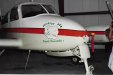
"Back in the day", I would make a paint mask and use 1-Shot lettering enamels.
This is one of Sky King's Cessnas. Once the graphics had fully cured, the whole plane was clear-coated with Emron (by the professional plane painters).
airplane 1.jpg
airplane 2.jpg
 
  • Agree
Reactions: 1 user

stickerhed

New Member
Why aren't you just cutting standard high performance vinyl for the numbers? Thinner, lighter, better adhesive, longer life. Wrap materials are meant to be used for branding, logos, temporary graphics/numbers on aircraft.
Has to be their logo colors, otherwise we would have just cut premium vinyl.
 

unclebun

Active Member
Do what we did in the old days--give them the closest vinyl color made to their logo color, and tell them the alternative is an inferior product they can have if they want, but fails faster and has to be replaced more often ($$)
 
  • Agree
Reactions: 1 user

DL Signs

Never go against the family
A better choice is IJ-175 instead of 180, it's more permanent with a proper cleaning, (I'll always recommend edge sealing too), and a hard post-heat (don't over-heat and warp the aluminum skin panels, some are pretty thin and will permanently warp if you're not mindful). What makes 175 so much better on planes is, besides being cast (no shrink), and air release for easier install, is once you do that post heat, it's there for the duration and very hard to remove, even if when you want to. It has all the characteristics of, but is more permanent than other cast automotive vinyls.

Seriously, make sure it's where and how you want it before you post heat.
 
  • Informative
Reactions: 1 user

starknaked

New Member
We have used 3M IJ180 LSE without any issues, it is a high tac low surface energy vinyl that needs to be printed to meet the cusotomers needs.
 
  • Agree
Reactions: 1 user

Big Rice Field

Electrical/Architectural Sign Designer
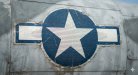
I am a veteran of the U.S. Air Force. For many years, they have used perforated vinyl for their markings. This prevents trapped air bubbles from expanding at higher altitudes. Attached is an image showing old perforated vinyl on a 1950-era jet aircraft. Modern logos have finer holes in the vinyl.
 

Attachments

  • image_aab54a4b.jpeg
    image_aab54a4b.jpeg
    812.4 KB · Views: 32

Stacey K

I like making signs
I am a veteran of the U.S. Air Force. For many years, they have used perforated vinyl for their markings. This prevents trapped air bubbles from expanding at higher altitudes. Attached is an image showing old perforated vinyl on a 1950-era jet aircraft. Modern logos have finer holes in the vinyl.
That's interesting!
 
  • Agree
Reactions: 1 user

d fleming

New Member
If it is on the exterior of the plane and in high wind resistance we cut paint mask and paint it. All the little stuff on interior etc gets hp vinyl. Mind you we don't do small planes, we do military and cargo jets. Same customer has tons of ground support equipment ( golf carts, refueling tankers, stair cases, etc and we can go with digital graphics to make them "look cool", lol. Sometimes we get older show planes which is really fun!
 
  • Agree
Reactions: 1 user

stickerhed

New Member
We have used 3M IJ180 LSE without any issues, it is a high tac low surface energy vinyl that needs to be printed to meet the cusotomers needs.
This is what we used and it failed. See my first comment. We ended up using primer and edge seal just to be sure. It failed on 2 different planes, always the front edge of the letters
 
We have been doing tail numbers and small graphics for years and we've always used 3m IJ 180 LSE with 8518 gloss laminate and, until recently, never had an issue. Now, 2 different planes have had the leading edge of the first 2 numbers start to peel off on both sides. What do you use for airplane graphics? When I look it up, it says IJ180 is ok to use.

Thanks,
Doug
In this world of new composites in the airplane industry, Are you sure the plane isn't made with a new type of laminate that has different properties?
 
  • Agree
Reactions: 1 users
Top