• I want to thank all the members that have upgraded your accounts. I truly appreciate your support of the site monetarily. Supporting the site keeps this site up and running as a lot of work daily goes on behind the scenes. Click to Support Signs101 ...

DC Theory/Dual LEAD LED Power supply to RGBW Amplifier connection

danhayes1188

New Member
we were given (4) amplifiers with one positive and one negative terminal screw on the input side of each. These were to be added(between the Leds and Power supplies) to a large sign which was powered by (4) dual lead(output) 60/120w 12v LED drivers, each pushed nearly to it's limit (79.9% capacity according to the wiring diagram we received.). The wiring diagrams, LED layouts, and instruction manual only showed how to attach these amplifiers to a single output power supply. Im new and most of our installers and techs are unfamiliar with these amplifiers. We came tothe conclusion that each output from the 4 power supplies would require it's own separate amplifier, the customer was confused by our requesting 4 more amplifiers, and had us contact the engineer for principal sloan who helped them place their order for the products we were supplied. He agreed with our lead installer's take, we would need an additional 4 amplifiers. So that's the solution we are going with.

But I am still curious what would happen if we tried to make it work with only 4 dual output PS and 4 amplifiers. Which apparently 4 other sign companies already did before us considering our customerhas been using the same wiring diagram and manufacturing order for the last 5 locations, and is now fairly upset that he has to go back behind them and verify that the signs arent burning out, we assume they used one lead only or bypassed the amplifiers all together as we did initially. Our lead told me that if we tried to use both output leads on one amplifier the voltages would cancel. This leads me to wonder if this is due to polarity. If you switched the wires so that a + and - are on the amplifiers + terminal and again a + and a - wire on the amplifiers negative terminal to reverse polarity,
(1) would this allow for current to flow to the device?
(2) would this simply overload the circuit and burn out the components?
(2a) do i have to worry about the power drawn by the controller and amplifier pushing the load past the power supplies' maximum recommended ampacity?
(3) is there any difference between the way one of these(see attached) dual-output power supply operates compared to two separate 60w/12v PS
(3B) does that depend on whether or not the two outputs share a neutral?
(3c) Should i think of the two output leads as 2 power supplies wired in parallel?
(4) can i check to see if the two outputs share a neutral by running a MM probe to the output leads of the PS and test for continuity?
5 does any of this make sense to someone who understands circuitry? im merely pretending to know enough to ask questions
as always please do not hesitate to callme out for my lack of understanding, just be specific so i'll know what i dont. thanks for the time it took to read this im sure it was difficult

 

Attachments

  • dual lead power supply from clubstudio.PNG
    dual lead power supply from clubstudio.PNG
    197.8 KB · Views: 25
  • rgbw-amplifier-datasheet.pdf
    569.3 KB · Views: 8
  • 102 in x 149.375 in- NBM- 279509- 10-3-2025 (REV).pdf
    3.3 MB · Views: 6
  • IMG_3660.JPG
    IMG_3660.JPG
    1.9 MB · Views: 21
  • rgbw-rf-led-controller-and-remote-install-guide.pdf
    2.1 MB · Views: 7

Texas_Signmaker

Very Active Signmaker
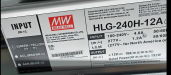
From my understanding each output on the power supply is like it's own 60w supply, so I would agree with you that each needs it's own amp. But why not just get power supply that does more than 60watt? The part number below will kick out much more. I've only come across those amps once in my career so I don't know too much about them.


1766627469288.png
 

danhayes1188

New Member
thats what we would have done, but for this job all materials were supplied by principal sloan per the customers request. thanks for the feedback
From my understanding each output on the power supply is like it's own 60w supply, so I would agree with you that each needs it's own amp. But why not just get power supply that does more than 60watt? The part number below will kick out much more. I've only come across those amps once in my career so I don't know too much about them.


View attachment 180326
 

JBurton

Signtologist
Stick with principal/sloan for the warranty if nothing else.
(1) would this allow for current to flow to the device?
Not sure.
(2) would this simply overload the circuit and burn out the components?
Not likely.
(2a) do i have to worry about the power drawn by the controller and amplifier pushing the load past the power supplies' maximum recommended ampacity?(amperage)
All the amplifier is doing is adding more amps from the controller and sending it down line. The worst thing to happen would be burning up the modules at the end of the line.
(3) is there any difference between the way one of these(see attached) dual-output power supply operates compared to two separate 60w/12v PS
No other than 3 more wirenuts to wire a second power supply in. We stopped using them as they get hotter than just 2 power supplies, and they tend to drop one leg at a time, so you come back with either a 120w, or a 60w, but some times theres no room to cram a second power supply in a box, and while you have 2 60w's to get it working, you have to order a new 120w to do it right.
(3B) does that depend on whether or not the two outputs share a neutral?
The output side only has positive and negative, neutral is the white wire on the input side.
(3c) Should i think of the two output leads as 2 power supplies wired in parallel?
It's literally like two power supplies taped together, and their primary wiring is already tied together.
(4) can i check to see if the two outputs share a neutral by running a MM probe to the output leads of the PS and test for continuity?
Sure, you can't really hurt anything with a multimeter.

Do note where it says max mods in series, you are going to have to split each leg off the power supply to no more than 38 modules, then pull a new lead of wire.
 

danhayes1188

New Member
Stick with principal/sloan for the warranty if nothing else.
(1) would this allow for current to flow to the device?
Not sure.
(2) would this simply overload the circuit and burn out the components?
Not likely.
(2a) do i have to worry about the power drawn by the controller and amplifier pushing the load past the power supplies' maximum recommended ampacity?(amperage)
All the amplifier is doing is adding more amps from the controller and sending it down line. The worst thing to happen would be burning up the modules at the end of the line.
(3) is there any difference between the way one of these(see attached) dual-output power supply operates compared to two separate 60w/12v PS
No other than 3 more wirenuts to wire a second power supply in. We stopped using them as they get hotter than just 2 power supplies, and they tend to drop one leg at a time, so you come back with either a 120w, or a 60w, but some times theres no room to cram a second power supply in a box, and while you have 2 60w's to get it working, you have to order a new 120w to do it right.
(3B) does that depend on whether or not the two outputs share a neutral?
The output side only has positive and negative, neutral is the white wire on the input side.
(3c) Should i think of the two output leads as 2 power supplies wired in parallel?
It's literally like two power supplies taped together, and their primary wiring is already tied together.
(4) can i check to see if the two outputs share a neutral by running a MM probe to the output leads of the PS and test for continuity?
Sure, you can't really hurt anything with a multimeter.

Do note where it says max mods in series, you are going to have to split each leg off the power supply to no more than 38 modules, then pull a new lead of wire.
thank you this helps tremendously
 

Ewan yu

www.printersign.com--Printhead,parts,supplier
-In a DC system, voltage does not cancel out.
-Connecting the + of one output to the – of another output is the same as creating a short circuit or a reverse back-feed. Forcing two power supplies to be paralleled when they are not meant to be paralleled causes one supply to try to charge the other. These are not “cancellation” effects, but potential damage situations.
-If both + and – are connected to the amplifier’s + terminal, and again both + and – are connected to the – terminal, will current flow? No — and it’s somewhat dangerous. This is basically shorting + and – on the same terminal, and the power supply would likely go into protection.
-Would this overload the circuit or burn components? There is some risk, but LED power supplies usually have protection. In most cases nothing serious happens, but the power supply may repeatedly trip into protection
-2a — The impact is minimal. The controller and amplifier themselves draw very little power. The real current draw comes from the LED modules.
-3 — Many so-called dual-output power supplies are actually a single 12 V output with two parallel sets of output wires for convenience, but some power supplies are internally true dual isolated outputs
-3b — Yes, it completely depends on that. If the two outputs share a common V– internally (and V+ is also common), then it’s basically one power supply with multiple output wires. If they are not common, they must be treated as two separate outputs.
4 amplifiers + 4 dual-output power supplies:
If the dual output wires are just parallel leads from the same 12 V output, then 1 power supply → 1 amplifier is fine, and both sets of output wires can be connected to the amplifier power input (or a distribution block).
If the dual outputs are truly isolated, then the two outputs cannot be connected to the same amplifier. Each output must have its own amplifier.
 
Top