• I want to thank all the members that have upgraded your accounts. I truly appreciate your support of the site monetarily. Supporting the site keeps this site up and running as a lot of work daily goes on behind the scenes. Click to Support Signs101 ...

Screen printing lifejackets??

ktyler1320

New Member
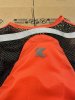
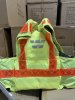
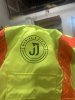
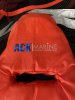
Our company manufactures marine safety products and I work in the signage department. I have two latex printers. We are currently outsourcing our life jackets to be personalized for our customers. We would love to bring this in house because we have locations throughout the United States and it's not cost effective to send them across the country to be screen printed. The person doing them now says they are screen printed but some of them look like vinyl. I have tried vinyl but it melts the foam in the jackets. Anyone have any idea how this is being done?
 

Attachments

  • 76306198894__8F34B992-842C-4C76-8F99-EF4BEFAFD422.jpeg
    76306198894__8F34B992-842C-4C76-8F99-EF4BEFAFD422.jpeg
    2 MB · Views: 51
  • IMG_0748.jpeg
    IMG_0748.jpeg
    1.9 MB · Views: 44
  • IMG_2326.jpeg
    IMG_2326.jpeg
    2.2 MB · Views: 40
  • IMG_2477.jpeg
    IMG_2477.jpeg
    2 MB · Views: 40
  • IMG_3909.jpeg
    IMG_3909.jpeg
    1.9 MB · Views: 57

unclebun

Active Member
Screenprint ink is vinyl. Plastisol is a brand name of the liquid PVC. After they screen it, it is either UV or heat cured.

It seems like you could easily bring screenprinting in-house. The volume should be there to amortize the cost of equipment, and it's not hard to learn. You'd need at least a couple of dedicated employees most likely.
 

Stacey K

I like making signs
A quick google search has me wondering if these should be printed on? I only do plastisol transfers so I'm not sure about how flash dryers work. Maybe you can print on the fabric before they are sewn together? I guess it's not that often people drown with a life jacket on anyway...


Using a Flash Dryer on a Life Jacket After Screen Printing​

You should not use a flash dryer on a life jacket after screen printing — it’s not recommended for PFDs and can damage both the jacket and the print.

Why it’s not advised​

  1. Life jacket care guidelines
    Manufacturer instructions for non‑inflatable PFDs stress air‑drying only, out of direct sunlight, and avoiding high‑heat or direct contact with hot surfaces Mercury Marine. Heat can degrade the foam core, stitching, and webbing, reducing buoyancy and safety. Mercury Marine specifically advises rinsing with fresh water, air‑drying, and never using high‑heat drying methods Mercury Marine.
  2. Flash dryer function
    A flash dryer is a high‑intensity infrared or quartz heat source designed to gel or fully cure screen‑printing ink in seconds Printable Press Printable Press+2. It operates at 240–330°F depending on ink type Fannon Products. This is far above the safe temperature range for PFD materials.
  3. Risk to the print
    Even if the jacket could survive the heat, the flash dryer’s concentrated, uneven heat can scorch, melt, or blister the ink layer, especially if the jacket’s fabric is not the same as the garment you normally print on Printable Press Printable Press+1. This can cause wash‑out or cracking.
  4. Risk to the PFD’s safety
    PFDs are engineered to meet strict safety standards. Any heat exposure that degrades the foam or webbing can make the jacket non‑compliant and unsafe in an emergency
 
  • Informative
Reactions: 1 user

JBurton

Signtologist
I'm sitting here wondering how someone would figure out that you've compromised their life jackets...
 
  • Hilarious!
  • OMG / WOW
Reactions: 1 users

VizualVoice

I just learned how to change my title status
There are nylon-specific Plastisols which are catalyzed and use a special low temp flashing process. Products like International Coatings 900 All-Pro Series or Lawson 900LF Series formulated with a mandatory bonding catalyst.
this is the proper answer. Catalyzed nylon ink. It's a PITA to use, but for the volume you're likely talking about it will probably be worth the hassle to figure out. If you get stuck remind me in a day or three and I can dig out my notes from when we used it last.
 
  • Agree
Reactions: 1 user

ktyler1320

New Member
Thanks everyone for the replies. I believe these are laid out to air dry after they are done. I will research the Catalyzed nylon ink. We tried heat press initially and it melts the foam very quickly, compromising the jackets so we can't do that.
 

VizualVoice

I just learned how to change my title status
Thanks everyone for the replies. I believe these are laid out to air dry after they are done. I will research the Catalyzed nylon ink. We tried heat press initially and it melts the foam very quickly, compromising the jackets so we can't do that.
IDK what your manufacturing process looks like, but could the blank panels not be printed before they're stuffed with the foam? If I were the one being asked to print them, that's one of the first questions I would have asked.
 

ktyler1320

New Member
IDK what your manufacturing process looks like, but could the blank panels not be printed before they're stuffed with the foam? If I were the one being asked to print them, that's one of the first questions I would have asked.
The jackets come to us already made, we sell the majority of them without any personalization, just some boats or ships request it. We aren't manufacturing the jackets in house, just food, water, signage and ring buoys in house.
 

Stacey K

I like making signs
I'm sitting here wondering how someone would figure out that you've compromised their life jackets...
I would pretty much guarantee even if you heat press a life jacket and it loses half it's buoyancy, theres still enough to keep a person's head above water. We used to water ski with a foam band around our waist and we never drowned.
It would be worse to have a life jacket that is too big, than heat pressed and only half buoyancy. Those things creep up if you fall when tubing and your head is where your boobs were, you can't see...pretty dangerous TBH.
 

dtfonestop

New Member
Since your vendor lays them out to air dry, my guess is they're using an air-dry (solvent-based) nylon ink rather than standard plastisol. Those inks bond to coated nylon without a dryer, so the foam never sees heat. Small runs can be done with a simple one-color screen or even a cut stencil, since most of these are just a boat or ship name.

Two other no-heat routes worth testing:
- Print on a separate nylon or vinyl patch with the printers you already have, then sew it onto the panel. Nothing touches the foam, and reprints are easy.
- Pad printing, if the names are small and repeat a lot.

Before you pick one, ask the jacket manufacturer what marking methods they approve. Anything that damages the shell or compresses the foam can be a problem on approved PFDs, and some manufacturers will tell you exactly which ink they use for vessel names.

Test on a scrap jacket first and check abrasion and a saltwater rinse.
 
  • Informative
  • I Appreciate You
Reactions: 1 users

hybriddesign

owner Hybrid Design
you can definitely heat transfer on these but you’ll need to do a little testing to see what temps they can handle. Do you have a heat press? If you might just get one of those little hand held presses that are under $50. Set it to 265F as that’s the lower threshold for a lot of heat transfer. Press it against one of the jackets for 10 seconds and see if you see any damage, I’m guessing you’ll be ok and if that’s fine then you should order dtf transfers as they’ll go on easily at that temp, maybe even down to 250F.

We’ve done a decent amount of life jackets and higher end PFD with heat transfer and never had any issues. Some heat transfers may have issues adhering if the shell is nylon (there are a number of heat transfer vinyls specially for nylon though) but I kind of doubt you’ll have many issues.

Companies like Insta make transfers that go on even lower but you generally have to order a lot of the same design so it may not work well for smaller orders.

Start out with the hand held press. Something like an insta 909 press would work well for doing a lot of these.
 
  • I Appreciate You
Reactions: 1 user

hybriddesign

owner Hybrid Design
btw, I have no affiliation with insta, I just know that they make higher end specialty transfers and we have one of their 909 presses and for this type of work it's amazing. It's pricey though, maybe $3k nowadays. A handheld press for under $100 might work really well unless you have hundreds of these and even for hundreds it's probably not too bad at all.
 

ktyler1320

New Member
btw, I have no affiliation with insta, I just know that they make higher end specialty transfers and we have one of their 909 presses and for this type of work it's amazing. It's pricey though, maybe $3k nowadays. A handheld press for under $100 might work really well unless you have hundreds of these and even for hundreds it's probably not too bad at all.
Thank you so much, we do have hundreds of them occasionally when a boat is replacing all of their jackets. I'm going to look into it now. And yes we do have a heat press that we bought for just making tshirts for the employees. The hand held may be easier for this application if we can get the temp low enough to not melt. Thanks again!
 

Johnny Best

Active Member
I did noticed that they are double printing on the material because of the texture. First pass in not filling everything in. Must be nylon ink then flash dried for second pass. You can tell on the smaller type that it has been double coated. If you are bringing it in house you are going to go through a deep learning curve to get it like the the ones you are outsorcing. "if something works, don't fix it".
 
  • I Appreciate You
Reactions: 1 user
Top