• I want to thank all the members that have upgraded your accounts. I truly appreciate your support of the site monetarily. Supporting the site keeps this site up and running as a lot of work daily goes on behind the scenes. Click to Support Signs101 ...

Warping sign

10sacer

New Member
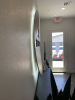
We fabricated this sign for a real estate showroom location in Las Vegas and in tow months it started to do what you can see in the photos.
Backer panel is 1/2" PVC painted with a woodgrain overlaminate glued down from Wilson Art.
I know the issue is the adhesive is drawing up the tension on the PVC. my question is what material should be used so this doesn't happen?
Average humidity in Vegas is about 30%.

Thanks in advance

 

Attachments

  • 659ee558-4b0e-4e8a-a3bc-5431b13bbe4c.jpg
    659ee558-4b0e-4e8a-a3bc-5431b13bbe4c.jpg
    460.5 KB · Views: 120
  • Image7.png
    Image7.png
    2.4 MB · Views: 116

MarkSnelling

Mark Snelling - Hasco Graphics
The laminate - did you apply with a laminator? It looks like classic "too much tension" where the laminate is trying to contract causing the board to contract with it.

IF you used a laminator and if the sign went through 'top to bottom' as far as the direction through the laminator, then that could be your problem.
 
  • Agree
Reactions: 1 users

unclebun

Active Member
The laminate - did you apply with a laminator? It looks like classic "too much tension" where the laminate is trying to contract causing the board to contract with it.

IF you used a laminator and if the sign went through 'top to bottom' as far as the direction through the laminator, then that could be your problem.
WilsonArt laminate is not a vinyl film. It's what is used to finish countertops. Like Formica, but a different brand.
 
  • Agree
Reactions: 1 user

DL Signs

Never go against the family
PVC is pretty pliable and bendable... Never used countertop lams on pliable material, I know it's manufactured to be rolled for shipping, maybe it retains that curl if applied to pliable stuff like PVC??? Something more rigid like acrylic would probably do the trick if you're going to re-do it.
 
  • Agree
Reactions: 2 users

cwstevens

New Member
1/4" to 3/8" acrylic would be a better choice for the bkgd. I'm guessing between the laminate contact cement on maybe 1/4" thick PVC is reacting and causing curling / warping.
1/4" pvc is notorious for warping with any kind of heat, add chemical reaction and you got yourself a potato chip on the wall.
PVC has its place, but usually for short term and I would not recommend for outdoors
 
  • Agree
Reactions: 1 user

Ziklag

Passion for SignGraphics!
You can also paint PVC with an oil base paint but it needs to be primed both sides then coated with finish paint both sides. Although consistent heat from lighting is potential reason to PVC bending, as cwstevens suggests,. As far as I know, I've painted both sides of PVC panels and did prevent wrappage even while being out side. We know that PVC is an open cellular material that easily succumbs to moisture or heat in given environments, if not prepped appropriately, bending is invited.
One last note; I notice the panel is suspended of the wall so the sign panel has nothing to stabilize itself to remain in a flat position. That may be consider at this junction just as well. PVC should always have a flat backing to be stable and not bend or if it needs spacing in back then continue with painting both sides then after fully cured, apply the laminate finish. If the finish can be printed to mimic a wood appearance surface instead of a glued laminate which can be aggressive as the adhesive cures putting tension to thin panels of PVC to buckle then printing would be considered a direction to go.
Hope that helps and btw, that's a cool design!

Sign I did 4 years ago;
It shows the same principle (second surface halo-lighted) except constructed from ext. aluminum channeled letters. There was a night I had to replace a section and I could feel the heat of the LED - not extremely hot but warm. So I believe your sign is generating some level of heat that's something to take into consideration.
CalvSign.jpg
 
Last edited:

cwstevens

New Member
not sure you can get small pieces of Di-Noc, unless it's just sample size like 4" x 4", seems like we have to order one of the 'full roll' size offerings....
 

DL Signs

Never go against the family
Where can I buy a small piece of Di-Noc?
Check with your vendors that handle 3M, they will often sell by the yard if they have any in stock, otherwise Fellers sells 48" wide by the yard... I know, we don't like using them either, but if they have what you need and your regular vendors don't...
 
  • Agree
Reactions: 1 user

10sacer

New Member
PVC is pretty pliable and bendable... Never used countertop lams on pliable material, I know it's manufactured to be rolled for shipping, maybe it retains that curl if applied to pliable stuff like PVC??? Something more rigid like acrylic would probably do the trick if you're going to re-do it.
I have had 1/2" acrylic signs do the same thing with laminate glued to the face
 

10sacer

New Member
1/4" to 3/8" acrylic would be a better choice for the bkgd. I'm guessing between the laminate contact cement on maybe 1/4" thick PVC is reacting and causing curling / warping.
1/4" pvc is notorious for warping with any kind of heat, add chemical reaction and you got yourself a potato chip on the wall.
PVC has its place, but usually for short term and I would not recommend for outdoors
PVC used was 1/2" thick
 

10sacer

New Member
You can also paint PVC with an oil base paint but it needs to be primed both sides then coated with finish paint both sides. Although consistent heat from lighting is potential reason to PVC bending, as cwstevens suggests,. As far as I know, I've painted both sides of PVC panels and did prevent wrappage even while being out side. We know that PVC is an open cellular material that easily succumbs to moisture or heat in given environments, if not prepped appropriately, bending is invited.
One last note; I notice the panel is suspended of the wall so the sign panel has nothing to stabilize itself to remain in a flat position. That may be consider at this junction just as well. PVC should always have a flat backing to be stable and not bend or if it needs spacing in back then continue with painting both sides then after fully cured, apply the laminate finish. If the finish can be printed to mimic a wood appearance surface instead of a glued laminate which can be aggressive as the adhesive cures putting tension to thin panels of PVC to buckle then printing would be considered a direction to go.
Hope that helps and btw, that's a cool design!

Sign I did 4 years ago;
It shows the same principle (second surface halo-lighted) except constructed from ext. aluminum channeled letters. There was a night I had to replace a section and I could feel the heat of the LED - not extremely hot but warm. So I believe your sign is generating some level of heat that's something to take into consideration.
View attachment 182554
Looking back on it - we should have laminated the backside, as well. Then tension would have been mitigated due to a push/pull situation. I do think they leave the lights on 24/7 - which is not ideal, too.
We couldn't screw through the face to mount it direct to wall, so we used a cleat mount with a spacer at the bottom. This helps with heat dissipation from the lights, too - supposedly. We will not be flying our installers back to Vegas to install the new sign, so it has to be a cleat mount that they can just put on and plug in themselves, so will have to just be a change to the base material that won't warp.
 
  • Agree
Reactions: 1 user
Top