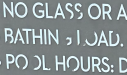
Thanks for your reply. This is a pool rules
sign that is loaded with letters and they are perfectly spaced. It would take a LOT of time to set each letter and I don't see any evidence of adhesive or tape residue where the missing parts are. The
sign looks too perfect to be done by manually applying the letters. The size of the
sign is 40" wide and 50" tall. The size of the letters are 1" high.
The process for lettering like that is it usually gets a transfer adhesive applied to the back side before cutting. PVC is pretty soft, so it can be cut via drag knife rather than a router head, giving nice crisp and clean edges & sharp corners without tool marks like routing leaves behind. After cutting it gets a heavy pre-mask applied to the face before removing it from the cutting table. The release liner is then picked from the transfer adhesive, it's lined up and laid on the
sign board. Press it down, remove the pre-mask, and voila... Large amounts of small 3d letters aligned perfectly.
Cutting letters out of thin pvc was kinda popular for a while years ago, there were some companies that did them, others with flatbed cutters and CNC's could do them in house easily, it was marketable... But the thinner PVC that cuts so sweet and easy also breaks down pretty quick, gets brittle, cracks and fails with long term use, especially outdoors, the more UV it gets, the quicker it deteriorates. Think of the vinyl on dashboards of older cars in sunny areas, it cracks, pieces start falling off, and even though there is an adhesive, it's all deteriorated, nothing but a stain left. Plus in a pool area you have chlorine gasses and other things at play helping to degrade things quicker. For longevity, if someone is hell bent on thin dimensional lettering like that you need to use aluminum or acrylic depending on the application. Modern stuff is better than when this was probably done, but you still need the right product for the environment.
Me? I'd play problem solver and talk the customer into something a little more suited for the environment, with a lower cost to make changes to or replace again in the future.