• I want to thank all the members that have upgraded your accounts. I truly appreciate your support of the site monetarily. Supporting the site keeps this site up and running as a lot of work daily goes on behind the scenes. Click to Support Signs101 ...

QR code - weed this?

JBurton

Signtologist
Barcodes are different from QR Codes regarding bits of data that can go missing. Lose one stripe of a bar code and it will be invalid. QR Codes can be generated with certain amounts of error correction built in; they can still work when missing some data spots or when a logo is covering up the middle of the code.
I didn't know this, but had to test it. You can indeed lose a significant amount of small squares and still read the code.
1777558659946.png
 
  • Informative
Reactions: 1 users

Stacey K

I like making signs
I didn't know this, but had to test it. You can indeed lose a significant amount of small squares and still read the code.
That's what I would be most worried about...losing some of the squares either from weeding or from weather, etc. Good to know!
 

JBurton

Signtologist
I would worry that if you lost enough of them it would send people to someone elses website :D
Oddly enough, removing one of the larger squares in the corner made it unreadable, not inaccurate... I guess qr codes have a good parity setup... Well now after reading the wiki article, I'm even more impressed. Also, this poor chap is featured in it (yes, that's two ladders strapped together... at least 2):
How_QR_codes_are_created.jpg
 
  • OMG / WOW
Reactions: 1 user

Bobby H

Arial Sucks.
JBurton said:
Oddly enough, removing one of the larger squares in the corner made it unreadable

The three larger squares in the upper corners and lower left corner are vital; a smartphone camera will use them to properly register angle/orientation before processing the code. There is a common smaller square in the lower right that's always present as well.

The QR Code generator in CorelDRAW provides choices for four levels of error correction: high, low, medium and quartile. Obviously the high setting will mean more data spots being recorded into the code.

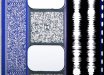
QR Codes remind me of digital audio data printed onto 35mm film prints. Dolby Digital audio was printed in squares of data between the sprocket holes. There was a little Dolby logo in the middle of each data square -kind of like people sticking logos in the middle of QR Codes. Sony's digital audio format was printed on the edges of the film strip. DTS used a time code that looked like Morse code to sync the film print to audio being played on CD-ROM discs. The time code was printed to the right of the old optical analog stereo audio track. The old DTS format is still used on 70mm film presentations now; those modern 70mm prints only have time code and no other audio data on them.

 

Attachments

  • 35mm-digital-audio.jpg
    35mm-digital-audio.jpg
    82.9 KB · Views: 5
  • Informative
Reactions: 1 user
Top