• I want to thank all the members that have upgraded your accounts. I truly appreciate your support of the site monetarily. Supporting the site keeps this site up and running as a lot of work daily goes on behind the scenes. Click to Support Signs101 ...

Question about gilding - wood, with false gold

Mike Medved

New Member
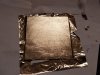
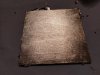
gild2.jpg This is my second attempt. Basswood plywood, sanded with 220, covered with Mona Lisa Red Basecoat, waited to dry for 4 hrs, applied water based size, waited about 40 min, applied false gold leaf. This is right after the leaf is applied and i brushed it with a soft brush: under raking light. Actually it's not that bad for my purposes, but i would like it smoother. What do I do - do I sand it with 600 after 220? Apply 2 layers of basecoat? Use a softer brush (I used the kabuki makeup brush)?

1772764320386-webp.54631
 

Attachments

  • gild1.jpg
    gild1.jpg
    319.4 KB · Views: 16

Signstein

New Member
How old is the leaf? I've had old leaves almost look striated and tarnished before. You could try using a softer brush when applying the leaf or using a burnishing tool after.
 

Gino

Premium Subscriber
Never used the stuff, but just looking and going by your comments....... even though it's dry to the touch quickly, that cheap stuff should still dry/cure for a good 24 hours. Also, the primer and cheap gold is for interior use, but intended for applications on metal, not wood.
 

pixelandquill

New Member
This looks good IMO. Looks like you can see the sanding marks which indicates you've got a pretty good adhesion with the leaf. A smoother foundation for sure is helpful, which can be a high flow paint, clay bole, etc. Burnish it after with an agate burnisher or something similar will potentially be a little better too. It smooths it and almost polishes it, though it's only going to smooth if the foundation is nice and flat. Applying with a transfer paper like common kitchen wax paper helps too reduce the wrinkles when laying it loose (doesn't appear a problem for you here). Nothing faux ever looks as good as real gold so far as my experience, because it's heavier and won't flatten out the same as the delicate gold leaf does. It's extremely cheaper, so I just roll with it. I've also used it on exterior with a few layers of UV clear coat and seems to hold up fine thus far. It'll tarnish very quickly so clear is a must, ever on interior I use a clear coat. I'm still learning, trying many experiments, selling to customers only on what works.
 

Mike Medved

New Member
Thanks for that info. When you say "tarnishes very quickly" - is it hours or days? How long can I wait before coating it?
 

kcollinsdesign

Old member
Several things here:

Allow base coat to dry longer (24 hours or more). The surface of the Mona Lisa red basecoat will dry to touch in several minutes, but the trapped solvent (water in this case) will take much longer to eventually evaporate. Balsa is an absorbent wood with a stringy texture and can hold a lot of water, adding to the length of time needed for curing.

Water based size cannot be burnished. It will always be a somewhat matte surface. This is a different process than traditional water-based gilding methods or the Kolner Water Gilding System. Water based size will form a tacky surface, essentially glueing the composite leaf to the surface. It is convenient for craft projects, but once the leaf is down that's what you are going to get. Slow setting oil-based size is recommended for higher quality results and can be burnished (to some extent with composite leaf).

It will tarnish, even inside. You may want to varnish with an oil-based varnish that has UV protection formulated in the product (it will have a light amber tint). Traditional spar varnish works well, but takes forever to dry and may need some kind of protection from dust and bugs while it is drying. If good enough is good enough polyurethane or acrylic varnish can be used.

22k "SignGold" vinyl is available in rolls and can be cut on a plotter. It has a UV barrier top film and can be cut and applied just like regular sign vinyl. It is expensive, but you will make it up in time.

 
  • Agree
Reactions: 1 user

pixelandquill

New Member
☝agreed!

The tarnish happens real quick outside, or if you get it wet. I left a sample outside with three different clears in strips and one strip without. One day outside without clear and it was ruined. Clear still looks the same. I use the 1shot UV clear mostly in general. Seems to work well. There’s tons of ways to do it, really leaf is primo!
 

Mike Medved

New Member
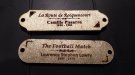
This is what I am doing this for. I am not sure if fully smoothed-on-bole look would actually be better. The striations may add to the "aged" look?

(There is a bit of burning on the top one, I adjusted the settings since to eliminate that)

IMG_20260306_214351750.jpg
 

Johnny Best

Active Member
Imatation gold is called “Dutch gold and made up of brass and zinc alloy, so yes it is prone to tarnish and is thicker than real goldleaf. If your hands are clean you do not need transfer paper like real gold leaf. If you want a smooth look you need to have the base smooth. Start with a good primer and at least 2 topcoats of enamel. Have always use slow oil size so cannot tell about waterbased size but have heard good things about it. Just get a good varnish clearcoat on top and it will holded up outside for some time according to where you live with heavy sun or not.
 
  • Agree
Reactions: 1 user

John_Smith

Enjoying retirement in Central Florida
Mike - what are your "realistic" expectations for your projects with metal leaf??
 

Mike Medved

New Member
Well - you can see above what I am making with this. I probably want to get it smoother than the nameplates in the pic. I just bought some clay and rabbit glue, going to mix me some bole and see how it goes.
 
I think it's the glue layer. There is no way to get it to be smooth and it does that when you put the gold leaf down because the glue is puddling unevenly and the leaf is not rigid itself. If you used a fake gold .5mm sheet it would have the rigidity to hols its smoothness. The only way to get it smooth is if the gold leaf was laminated with a glue-paper (or glue vinyl) sheet. then the smoothness of the sheet would probably hold the foil flat. and then you apply that yo the board. Or maybe applying it to an aluminum sheet would be better? But I think to make it perfect, it is too complicated. The best way is to use a metal sheet and have a metal electro-coater coat it with their fake gold metal. But once again... $$$!
 

Johnny Best

Active Member
I am getting some clay and rabbit glue, will follow the recipe to make some bole, see if that will be smoother.
Somwone is leading you down a rabbit hole with that clay and glue finish.
If you are making nameplates as you showed, why not just use brass and cut it to the shape you need and then laser engrave the copy or screenprint.
 
  • Agree
Reactions: 1 user

Mike Medved

New Member
Somwone is leading you down a rabbit hole with that clay and glue finish.
If you are making nameplates as you showed, why not just use brass and cut it to the shape you need and then laser engrave the copy or screenprint.
I am doing that as well. But I want to have different options.
 

Mike Medved

New Member
Are these nameplate for urns ??
Paintings :) But hey if someone wants it for an urn, I will make one.

Traditional, old-fashioned, nameplates on paintings' frames were made from water-gilded hardwood. Today some people prefer brass. I actually started this because I could not find anyone who would make me an aged-brass nameplate because I don't like shiny gold ones. I can make aged-brass, fully-aged-brass, shiny-brass ones, I perfected that so far. Now I am trying to do the "real" water-gilded hardwood ones.
 

Gino

Premium Subscriber
Then, if you're you're going for 'real'..... why are you using all these cheap hack tricks ?? It's becoming evident you don't know what you're doing. Your profile even indicates such.
 
  • Agree
Reactions: 1 user

Mike Medved

New Member
Then, if you're you're going for 'real'..... why are you using all these cheap hack tricks ?? It's becoming evident you don't know what you're doing. Your profile even indicates such.
I am learning. Thank you for your input.
 
  • Informative
Reactions: 1 user

Johnny Best

Active Member
You are leaning. Water size has only been around for 30 years the ancient Egyptians used blood for gold leaf size but for centuries size was oil based that clay and rabbit glue would be a mess just get some good primer and put 2 or 3 coats down and sand between coats do not brush it on but use spray cans to build it up and your final coat of a good oil base paint can be brushed on because it will hell out smoothly
 
Top