
• I want to thank all the members that have upgraded your accounts. I truly appreciate your support of the site monetarily. Supporting the site keeps this site up and running as a lot of work daily goes on behind the scenes. Click to Support Signs101 ...

Gemini Sign Letters on Stucco Building

Stevealex

New Member
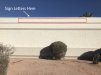
Hello, Thanks in advance for any suggestions you may have. This will be my first time installing molded plastic lettering on an office building. i have a few questions. 1). The building exterior surface is covered with stucco but I am unsure of what the core is made from and therefore not sure what the best options are for attachment. Should I use stud? pad? combo?.( I have attached photo of building if that helps). 2) Is molded plastic a good choice of material for these sign letters? And finally, I was going to use Gemini for these letters but I dont know if there is a better option or if anyone has any suggestions for other vendors that offer these letters. Thanks
 

Attachments

  • sign letters area-01.jpg
    sign letters area-01.jpg
    1 MB · Views: 915

signbrad

New Member
Industry standard calls for a concealed stud mount. Adhesive alone will result in a substandard install that may fail.
Ask Gemini for a drilling template. Make sure the letters line up with the template I have received templates before that had mistakes, though it's rare.

Tape the pattern to the wall and drill holes. If the surface is EFS (like Dryvit) on foam, drilling will be easy. You can even start each hole with an awl. EFS is also applied to cinderblock, plywood, or other substrates.
If the surface is stucco over masonry you will need masonry bits and a hammer drill. Usually 3/16-inch diameter. Take a 1/4-inch bit with you, also. If any of the studs cause a letter to be in a serious bind, you can drill that hole larger.

Dry fit first to make sure the letter fits and will stay in place, and studs will not try to come back out. Then apply clear silicone to the studs by inserting each stud into the nozzle of your silicone tube and pulling it out. You can control the amount of silicone left on each stud by trigger pressure as you pull it out. Don't try to squirt silicone into the holes. This is ineffective and wastes adhesive. Just coat the studs and insert.
If a stud is too loose and tries to come back out when you dry fit, wrap a little tape around just that stud before you silicone it. Or, sometimes you can tape the letter to the wall till the adhesive sets up. Pull the tape off before you leave.

Brad in Kansas City
 
  • Agree
Reactions: 1 users

Stevealex

New Member
Industry standard calls for a concealed stud mount. Adhesive alone will result in a substandard install that may fail.
Ask Gemini for a drilling template. Make sure the letters line up with the template I have received templates before that had mistakes, though it's rare.

Tape the pattern to the wall and drill holes. If the surface is EFS (like Dryvit) on foam, drilling will be easy. You can even start each hole with an awl. EFS is also applied to cinderblock, plywood, or other substrates.
If the surface is stucco over masonry you will need masonry bits and a hammer drill. Usually 3/16-inch diameter. Take a 1/4-inch bit with you, also. If any of the studs cause a letter to be in a serious bind, you can drill that hole larger.

Dry fit first to make sure the letter fits and will stay in place, and studs will not try to come back out. Then apply clear silicone to the studs by inserting each stud into the nozzle of your silicone tube and pulling it out. You can control the amount of silicone left on each stud by trigger pressure as you pull it out. Don't try to squirt silicone into the holes. This is ineffective and wastes adhesive. Just coat the studs and insert.
If a stud is too loose and tries to come back out when you dry fit, wrap a little tape around just that stud before you silicone it. Or, sometimes you can tape the letter to the wall till the adhesive sets up. Pull the tape off before you leave.

Brad in Kansas City

Thanks Brad. That answered alot for me. Would you recommend the pad in adittion to the stud or are those only used in the case of offsetting the letters from the wall?
 

Stevealex

New Member
Industry standard calls for a concealed stud mount. Adhesive alone will result in a substandard install that may fail.
Ask Gemini for a drilling template. Make sure the letters line up with the template I have received templates before that had mistakes, though it's rare.

Tape the pattern to the wall and drill holes. If the surface is EFS (like Dryvit) on foam, drilling will be easy. You can even start each hole with an awl. EFS is also applied to cinderblock, plywood, or other substrates.
If the surface is stucco over masonry you will need masonry bits and a hammer drill. Usually 3/16-inch diameter. Take a 1/4-inch bit with you, also. If any of the studs cause a letter to be in a serious bind, you can drill that hole larger.

Dry fit first to make sure the letter fits and will stay in place, and studs will not try to come back out. Then apply clear silicone to the studs by inserting each stud into the nozzle of your silicone tube and pulling it out. You can control the amount of silicone left on each stud by trigger pressure as you pull it out. Don't try to squirt silicone into the holes. This is ineffective and wastes adhesive. Just coat the studs and insert.
If a stud is too loose and tries to come back out when you dry fit, wrap a little tape around just that stud before you silicone it. Or, sometimes you can tape the letter to the wall till the adhesive sets up. Pull the tape off before you leave.

Brad in Kansas City

And one last thing is can you give me a ball park figure of what one would charge for the installation of these letters?
 

Stevealex

New Member
You're like a customer... "how much do yall charge for a sign?"

Well what kind of sign are ya looking for?

You need to provide details
Lol, You got me there. So the letters are molded plastic. 12" high caps and 9" lower case. 24 letters total. 19' total width and stud mounted. A tall ladder should be sufficient to complete work.
 

Texas_Signmaker

Very Active Signmaker
When I'm selling the letters, I tend to pad the letters more than the install because people won't like paying $500 if you are only onsite for 2 hours. (I prep the letters and trim pattern in the shop and come out to the jobsite with studs already in letters ready to go) People can wrap their head around an hourly labor rate easier than the cost of dimensional letters.

If I was installing for you... $500-$750
If I was selling them the letters and installing... I'd show them an install charge of $250-$350.
 
  • Agree
Reactions: 1 user

Gino

Premium Subscriber
My question to you would be....... do you have this job ?? If so, how'd you quote this job, not knowing what you're doing ??

If you're only quoting it now....... why not find out ahead of time what's behind the stucco, what the letters cost, how much time will it take to instal them, how much monkey time you have d!cking around with all this stuff, do you have the right insurance to do this, do you have ample tools for drilling, what do the permits cost and most of all..... are you doing this solo ?? Will you need to pay a helper ?? I know for me, I'd hate to put a 25' pattern up on a wall by myself. Oh yeah, how high in the air is this going ??
 
Last edited:

signbrad

New Member
Thanks Brad. That answered alot for me. Would you recommend the pad in adittion to the stud or are those only used in the case of offsetting the letters from the wall?

I have used pads a handful of times in 45 years. The additional adhesive area is generally unnecessary. And on smaller letters, they are unsightly, in my opinion. If you are worried about standing off the letters on the same plane with each other, you can use sleeves for spacers. Gemini may sell them. But they don't guarantee the letters will be even with each other. You still may need to tweak.
When I want an offset, I just eyeball it. To check how they look, get at one end of the installed line of letters and sight along their fronts. It is usually obvious if one is too far out compared to the others.

Brad
 
  • Agree
Reactions: 1 user

signbrad

New Member
Carefully job cost this. Track time on each phase. As you become accustomed to installing letters, you will become familiar with the time needed for various wall types and situations.
Job costing is essential on new types of work. It should also be done periodically on familiar work.

Brad
 
  • Agree
Reactions: 1 user

Moze

Active Member
Are you actually using formed letters or are you using cut acrylic letters?

If you're using formed letters (hollow backs), you'll need to stud-mount. Brad covered the install method pretty well.

If you're using cut acrylic (looks nicer, in my opinion), you could tape-mount along with Lexel and you would be fine.

If the picture you posted is where the letters are going, that's pretty low to the ground and a pretty straightforward install. figure a few hours and charge what you need accordingly.
 

Jharrison86

New Member
Don't really mean to revive such an old post but this is the closest post I have seen to an issue I am trying to solve.

We install stud mounted Gemini letters on stucco faced entrance monuments, my issue is on occasion our tapes we use to hold up the paper templates don't want to adhere to the stucco regardless of the tape type we have with us.

Would anyone have an idea for a tape that would work best for this kind of material or any tips for how to hold up a paper pattern better?
 

Attachments

  • IMG_8755.JPG
    IMG_8755.JPG
    677.8 KB · Views: 17

Gino

Premium Subscriber
Over the years, all I used or the guys was painters blue tape. Ya might hafta double tape it or bridge it, but it worked inside and outside just fine

We used it for both stud mount & pounce patterns
 
  • Agree
Reactions: 1 user

Texas_Signmaker

Very Active Signmaker
Gorilla tape or mount the pattern to coropast. You can also run duct tape on the pattern, and put a screw and washer inside where one of the letters go
 
  • Agree
  • Informative
Reactions: 2 users

JBurton

Signtologist
Gorilla tape for fresh stucco, once it's stuck, pound it with the palm of your hand to get better adhesion. If it keeps falling, add more tape. Very few problems in life aren't solved with more tape... Unless someone waterproofed the block right before you got there, in which case layer of tape with a screw through it is going to have to suffice.
 
  • Agree
Reactions: 1 user
Top